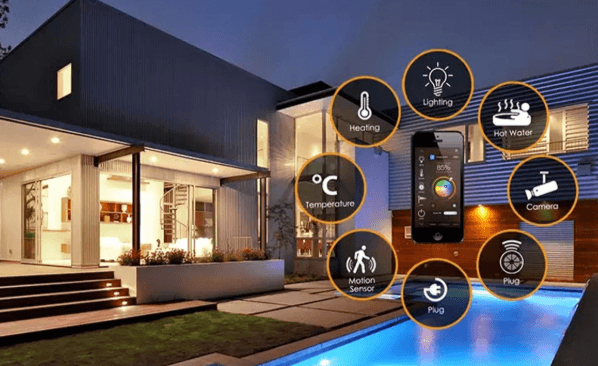
Automated living blends daily routines with intelligent systems that anticipate needs. Homes gather contextual data to adjust lighting, climate, and security, while appliances coordinate in real time. Communities deploy modular, adaptive infrastructure that scales with demand and preserves choice. Privacy and control become governance questions as models strive for transparent accountability. The trajectory suggests a balance between convenience and rights, inviting scrutiny of long-term impacts and the pathways that secure trustworthy, human-centered automation.
What Automate Living Means in Daily Life
Automated living integrates intelligent systems into everyday routines to optimize comfort, efficiency, and safety.
The approach reframes daily life as modular, proactive decision-making where home automation coordinates tasks, sensors monitor conditions, and interfaces remain unobtrusive.
This vision emphasizes autonomy, measurable improvements in energy use, and adaptive responses to changing contexts, enabling individuals to pursue freedom within a seamlessly organized, data-driven environment.
How Homes Learn and Adapt to You, Safely
How do homes learn and adapt to inhabitants while preserving safety? Data streams reveal adaptive interfaces that calibrate comfort without compromising autonomy. Systems model behavior, predict needs, and verify safety through layered privacy ethics, audit trails, and transparent controls.
Projections suggest resilient, user-centric feedback loops; they optimize energy, security, and well-being while preserving freedom to override, customize, or silence automation when desired.
Designing Communities and Cities Around Automated Living
Designing neighborhoods emerge as modular templates, enabling adaptive zoning and shared infrastructure.
Urban automation accelerates efficiency, resilience, and choice, inviting civic experimentation while preserving individual freedoms through transparent governance and outcome-focused metrics.
What to Watch For: Privacy, Control, and Human Connection
In an era of pervasive automation, the balance between data-driven efficiency and individual autonomy remains the central governance challenge, with privacy breaches and opaque data practices posing measurable risk to trust, consent, and civil liberties.
The trajectory emphasizes privacy concerns and data ownership as core levers; proactive controls, transparent models, and user-centric rights will shape resilient, freedom-preserving ecosystems—and informed, voluntary participation.
See also: The Future of Autonomous IoT Networks
Frequently Asked Questions
How Will Automation Affect Job Security Long-Term?
Automation may erode some roles, yet create new ones; job security could shift rather than vanish, with long term adaptability and retraining shaping outcomes. Data-driven projections suggest flexible skills preserve autonomy, fostering freedom despite evolving labor markets.
What Are the Ethics of AI in Home Decisions?
Autonomous home decisions pose ethical questions about consent governance and ethics transparency. The analysis foresees AI systems balancing user autonomy with safeguards, aiming for transparent data use, clear consent, and accountable governance, even as households pursue liberty through intelligent environments.
Who Is Responsible for System Failures or Damages?
Responsibility allocation and liability frameworks will increasingly define who bears risk for system failures or damages as autonomous homes scale, with data-driven analyses guiding transparent accountability, adaptive regulations, and proactive safeguards that empower individuals while clarifying collective obligations.
How Affordable Will Automated Living Become for Families?
Affordable adoption advances gradually, as families forecast finances and policy shifts. The analysis suggests steady declines in cost per capability, with家庭 budget impact moderated by subsidies, economies of scale, and innovative financing, enabling broader participation in automated living futures.
Can Automation Replace Human Interaction Entirely?
Automation cannot fully replace human interaction, though automation ethics and home privacy concerns shape its trajectory. Data-driven projections suggest tempered adoption, preserving autonomy while enabling companions; speculative benefits await, yet freedom requires safeguards and deliberate, ongoing human-centered design.
Conclusion
In the closing frame, automated living stands as a quiet compass, its needle nudging toward efficiency while steadying human rhythm. Data streams become rivers of insight, shaping rooms and streets like sculptor’s hands. Privacy curtains draw, then re-open, revealing trusted patterns rather than invasive shadows. Systems hum in unison, a chorus of purpose-built routines. The city, a living ledger, records choices with clarity, inviting accountability. The horizon glows with measurable promise, anchored by guarded humanity.