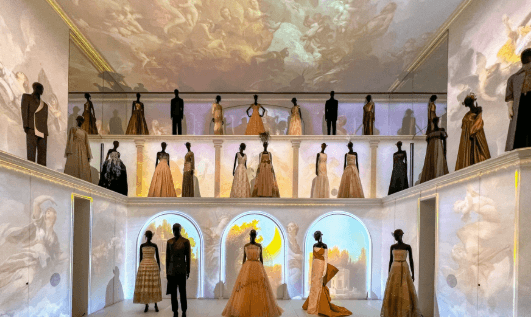
Famous fashion exhibitions reframed garments as cultural evidence and narrative arguments about identity. They integrated curatorial rigor with disciplinary dialogue, turning runways into scholarly, archive-building moments. Chronologies and themes operated in tandem to map shifts in audience expectation and industry norms. Display logic balanced provenance with interpretive framing, inviting critical reflection on material culture. The outcome is a cumulative archive whose inclusive representation and analytic depth illuminate fashion’s past and its contemporary implications, inviting further inquiry.
What Made These Exhibitions Groundbreaking
The exhibitions in question established benchmarks by redefining how fashion could be presented as cultural and historical evidence rather than mere display. They reframed artifacts as arguments about identity and social context, enabling cross-disciplinary dialogue. This approach fostered interpretive rigor, situating garments within broader narratives. Two word discussion idea A, two word discussion idea B underpin these shifts, guiding scholarly reception and public engagement.
Chronology of Iconic Fashion Shows Through Time
Chronology of Iconic Fashion Shows Through Time. The sequence maps transformative moments across eras, where designers reframed audience expectation and industry standards. An analytical lens reveals how iconic runways organized spectacle, while archival storytelling contextualizes shifts in taste. Museography trends influenced display logic, and garment preservation concerns shaped curatorial choices, ensuring tangible traces endure within a nuanced, scholarly narrative of fashion’s evolving chronology.
Curation Tricks: How Museums Tell Garment Stories
Museums translate fabric into narrative by layering object selection, display architecture, and interpretive text into a coherent story that guides visitor perception.
Curation hinges on a curatorial voice that mediates meaning, balancing thematic coherence with interpretive openness.
Display sequencing organizes garments chronologically, thematically, or socially, revealing connections across cultures while inviting critical reflection on material culture and historical context.
Legacy and Lessons for Today’s Fashion Exhibitions
Indeed, fashion exhibitions today can be read as cumulative archives whose legacy rests on transparent provenance, inclusive representation, and critical interpretation; lessons from past displays inform how contemporary shows balance spectacle with scholarly rigor. The legacy emphasizes story arcs that guide interpretation, while audience engagement shapes pacing, scope, and accessibility. Contextual scrutiny encourages ongoing reflexivity, ensuring exhibitions remain rigorous, participatory, and responsive to cultural diversification.
See also: Risks of DeFi Investments
Frequently Asked Questions
How Have Fashion Exhibitions Influenced Contemporary Designer Collaborations?
Exhibitions shape contemporary designer collaborations by framing narrative contexts that encourage fashion partnerships and designer crossovers; curatorial insight highlights disparate disciplines, enabling brands to exchange techniques, aesthetics, and narratives, thus accelerating experimentation and strategic partnerships within global fashion ecosystems.
What Roles Do Audiences’ Voices Play in Shaping Future Exhibits?
Metaphorically, audiences shape tomorrow’s galleries. Audience feedback informs curatorial pivots, while participatory curation democratizes display decisions, elevating lived experience and relevance; thus future exhibits reflect collective voice, balancing scholarly context with aspirational freedom in presentation and interpretation.
How Do Fashion Museums Address Accessibility for Diverse Visitors?
Inclusive access is pursued through multilingual tours, virtual accessibility, and tactile displays, enabling diverse visitors to engage with collections; museums contextualize barriers, measure impact, and iteratively refine practices toward equitable participation and broader scholarly freedom.
Which Exhibitions Sparked Global Cultural Conversations Beyond Fashion?
Exaggerating the impact, the exhibitions sparked global conversations: Iconic curatorial approaches met diverse audiences, shaping discourse beyond fashion; their Global reception reframed identity, power, and culture, revealing fashion as a catalyst for sociopolitical dialogue analyzed with scholarly, freedom-embracing rigor.
What Technologies Show up Next to Enhance Garment Storytelling?
Next technologies likely include immersive data visualization and AI-driven narratives, enabling design storytelling and wearable tech integration to convey garment heritage. The analysis suggests hybrid media, real-time sensing, and modular interfaces that empower audiences seeking contextual freedom.
Conclusion
Across centuries, fashion exhibitions have become quiet laboratories where fabric and memory meet. The gallery lights sketch timelines in silk and shadow, turning dresses into persuasive arguments about identity, power, and culture. Curators stitch disparate eras into coherent narratives, transforming runways into archives and audiences into participants. As threads of provenance intertwine with interpretive rigor, the storied wardrobe reveals both history’s friction and its forward pull—an enduring reminder that garments, rightly curated, illuminate the social fabric they inhabit.